
Top-Rated Products For Floor Pourings To Support Your Construction Goals
Equip yourself with the most highly recommended tools and materials to facilitate smooth and successful floor pouring work.
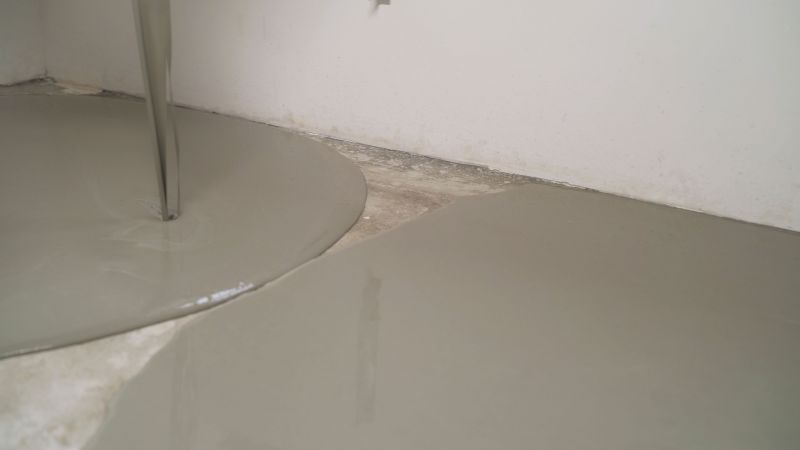 Floor pouring products encompass a diverse range of materials and tools designed to create smooth, durable, and level surfaces in various construction and renovation projects. These products are essential for achieving professional-quality finishes in areas such as basements, garages, commercial spaces, and decorative flooring applications. The selection of the appropriate product depends on factors like the type of substrate, the desired finish, load requirements, and environmental conditions. Proper preparation and application are crucial to ensure the longevity and performance of the poured floor, making the right product choice vital for successful results.
Top Overall Option
Self-Leveling Floor Compound
A versatile self-leveling floor compound offers an easy-to-apply solution for creating smooth, even surfaces. It is suitable for a variety of substrates and can be used in both residential and commercial settings. Its flowable consistency helps achieve a flat finish with minimal effort, making it a popular choice among professionals and DIYers alike.
Types of Products For Floor Pourings
Self-Leveling Underlayment
Pre-mixed compounds designed to create a smooth, level surface for flooring installation.
Traditional Concrete Mix
Standard concrete blends used for structural and foundational floor pours.
Rapid-Set Floor Patch
Quick-curing patch compounds ideal for repairing and leveling existing floors.
Polymer-Modified Overlay
Enhanced overlays that improve flexibility and adhesion for decorative or functional surfaces.
Epoxy Floor Coatings
Resilient coatings that can be poured as a layer for industrial or decorative purposes.
Mud Bed Mix
Traditional mixture used for leveling and creating a base for tile or stone installations.
Fiber-Reinforced Floor Mix
Concrete mixes enhanced with fibers for increased durability and crack resistance.
Resin-Based Pourables
Flexible resin compounds suitable for creating decorative or specialty floors.
Underlayment Toppings
Thin overlays designed to improve surface flatness and prepare for final flooring.
Slip-Resistant Coatings
Pourable coatings with textured surfaces to enhance safety in high-traffic areas.
Popular Choices
Widely used for creating smooth, flat surfaces in various flooring projects.
Commonly chosen for quick repairs and surface leveling.
Favored for durability and aesthetic appeal in industrial and commercial settings.
Popular for fast repairs and small-scale leveling tasks.
Preferred for decorative finishes and enhanced adhesion.
Chosen for high-strength applications requiring crack resistance.
Increasing in popularity for custom and artistic flooring solutions.
Commonly used to prepare floors for final coverings with a smooth finish.
Selected for safety in commercial and industrial environments.
Typically, floor pouring involves the use of specialized compounds that can range from self-leveling overlays to traditional concrete mixes. Self-leveling compounds are particularly popular for their ease of application and ability to produce a flat, uniform surface quickly. These products often come pre-mixed and require minimal preparation, making them suitable for both professional contractors and DIY enthusiasts. When choosing a product, consideration should be given to its setting time, flowability, curing process, and compatibility with subsequent flooring layers.
In addition to the core pouring compounds, various accessories and additives are available to enhance performance. These include primers to improve adhesion, fiber reinforcements to increase toughness, and sealers to protect the finished surface. Proper tools such as trowels, spiked rollers, and gauges are also necessary to achieve optimal results. Understanding the different product types and their specific applications can help ensure a successful floor pour that meets structural and aesthetic expectations over time.
Overall, selecting the right products for floor pouring is a critical step in any flooring project. Whether aiming for a smooth garage floor, a resilient commercial surface, or a decorative overlay, the right combination of materials and tools can facilitate a process that is efficient and yields durable outcomes. Consulting product specifications and user guides can provide valuable insights into application techniques and performance expectations, ultimately supporting a well-executed project.
Key Buying Considerations
- Determine the load-bearing requirements of the floor to select appropriate strength and durability.
- Consider the setting time and workability of the product to match your project timeline.
- Evaluate whether the product is suitable for the existing substrate and environmental conditions.
- Check compatibility with subsequent flooring materials such as tiles, wood, or carpet.
- Assess the level of surface flatness and finish desired for your project.
- Review the curing process and whether additional sealing or finishing steps are needed.
- Identify if additives like fibers or sealers are necessary to enhance performance.
- Consider ease of mixing and application, especially for DIY projects.
- Verify product coverage to estimate quantities needed for your area.
- Understand the recommended tools required for proper application.
- Look into the product’s resistance to moisture, temperature changes, and wear.
- Determine if the product complies with local building codes and standards.
- Assess the potential for shrinkage or cracking and select products designed to minimize these issues.
- Review user feedback and technical datasheets for insights into performance expectations.
- Consider the cost-effectiveness of the product relative to its performance features.
This page may contain affiliate links. We may earn a commission if you make a purchase through these links, at no additional cost to you.